Showing posts with label Trauma. Show all posts

March 18, 2008

Recommended Reading


Book Description:

When Judith Herman's Trauma and Recovery was first published five years ago, it was hailed as a groundbreaking work. In the intervening years, Herman's now classic volume has changed the way we think about and treat traumatic events and trauma victims. In a new introduction, Herman chronicles the incredible response the book has elicited and explains how the issues surrounding the topic of trauma and recovery have shifted within the clinical community and the culture at large. Trauma and Recovery brings a new level of understanding to a set of problems usually considered individually. Herman draws on her own cutting-edge research on domestic violence, as well as on a vast literature of combat veterans and victims of political terror, to show the parallels between private terrors such as rape and public traumas such as terrorism. The book puts individual experience in a broader political frame, arguing that psychological trauma can be understood only in a social context. Meticulously documented and frequently using the victims own words as well as those from classic literary works and prison diaries, Trauma and Recovery is a powerful work that will continue to profoundly impact our thinking.


This fascinating investigation into what makes abusive men tick is alarming, but its candid handling of a difficult subject makes it a valuable resource for professionals and victims alike. Bancroft, the former codirector of Emerge, the nation's first program for abusive men, has specialized in domestic violence for 15 years, and his understanding of his subject and audience is apparent on every page. "One of the prevalent features of life with an angry or controlling partner is that he frequently tells you what you should think and tries to get you to doubt or devalue your own perceptions and beliefs," he writes. "I would not like to see your experience with this book re-create that unhealthy dynamic. So the top point to bear in mind as you read [this book] is to listen carefully to what I am saying, but always to think for yourself." He maintains this level of sensitivity and even empathy throughout discussions on the nature of abusive thinking, how abusive men manipulate their families and the legal system and whether or not they can ever be cured. Jargon-free analysis is frequently broken up by interesting first-person accounts and boxes that distill in-depth information into simple checklists. Bancroft's book promises to be a beacon of calm and sanity for many storm-tossed families.
Copyright 2002 Reed Business Information, Inc.

February 11, 2008

The elevated risk for non-lethal post-separation violence in Canada: a comparison of separated, divorced, and married women

The purpose of the study was to shed fight on the potentially differing dynamics of violence against separated and divorced women by their ex-husbands and violence against married women by their current husbands. Using a nationally representative sample of 7,369 heterosexual women from Cycle 13 of Statistics Canada's General Social Survey, available risk markers were examined in the context of a nested ecological framework. Separated women reported nine times the prevalence of violence and divorced women reported about four times the prevalence of violence compared with married women. The strongest predictors of violence against married women, namely, patriarchal domination, sexual jealousy, and possessiveness, were not significant predictors of violence against separated and divorced women. This suggested that post-separation violence is a complex phenomenon the dynamics of which can be affected by much more than domination and ownership.

References:
Brownridge, Douglas A., Ko Ling Chan, Diane Hiebert-Murphy, Janice Ristock, Agnes Tiwari, Wing-Cheong Leung, and Susy C. Santos. "The elevated risk for non-lethal post-separation violence in Canada: a comparison of separated, divorced, and married women.(Report)." Journal of Interpersonal Violence 23.1 (Jan 2008): 117(19).

Emotional rescue: has a focus on physical abuse hurt the battered women's movement?

Evan Stark began writing about the demise of the battered women's movement in 1995, the year after Congress passed the Violence Against Women Act. That same year, President Bill Clinton, who signed the act into law, addressed a group of prominent women's advocates at the White House; Stark was among them. It was a time of unprecedented national recognition for the movement, but as he applauded the president's speech, Stark caught the apprehensive eye of a colleague. "We had come a long way" he remembers thinking. "Perhaps too far."

Last March, Stark published Coercive Control: How Men Entrap Women in Personal Life, the book he started 12 years ago. In it, he reaffirms his hunch from the heady days of VAWA: that in its quest for political and popular support, the battered women's movement lost its way. So much so, he says, it's currently stuck. He points to evidence that women are as likely to be killed by their partners today as they were 30 years ago, and that abusive men are almost as unlikely as they were back then to ever land before a judge, let alone behind bars. And he makes the counterintuitive argument that one of the biggest wrong turns the battered women's movement took was focusing too much on physical violence.

Stark describes the early battered women's movement, born in the mid-'70s, as a radical uprising, steadfast in its insistence that domestic violence comes from societal, not individual pathology; in a word, patriarchy. This idea was highly unpopular, he says, because it implied any man could be abusive and any woman abused. So the movement existed on the fringe, initially, estranged even from mainstream feminists. But as shelters spread-growing in numbers from 24 in 1976, to 163 in 1977, to 1,200 by the late '80s--the movement needed help, and started compromising its ideals. It had better luck getting money from governments and charities by present; ing black eyes and broken bones than by kicking up a fuss about gender inequality.

Meanwhile, says Stark, men were still abusing women, only not as obviously. Physical violence became just one of many ways men exerted what Stark calls "coercive control." He gives countless other examples: one man refuses to let his wife's family visit their home; another accuses her of infidelity if she goes out with friends. One man requires his wife to record how she spends every penny in a daily logbook; another won't speak to her when she doesn't launder his socks the way he likes. In one scenario, a man covers his sleeping wife's mouth just long enough to wake her up, gasping for air, and then pretends he is asleep. Applied systematically, Stark says, these are tactics that isolate, intimidate and degrade women to the point that they question their own "personhood" And this, he says, "can be more devastating than injurious assault."

Stark recounts testimony by women that back up this claim, and many domestic violence experts say women tell them the same thing--the violence wasn't the worst part. Stark is also among many experts who say a woman can be at just as much risk from a man who seldom lifts a finger against her as from one who frequently does. Angelique Jenney, director of family violence services at Toronto's Child Development Institute, worked with a woman whose husband was only ever charged once, with uttering threats. At his bail hearing, he was given 48 hours to surrender his firearms to the police, and 12 hours later, he killed his wife. Jenney frequently sees courts deny women protection orders against their partners, because "the abuse is too subtle."

To some extent, Jenney shares Stark's concern about the state of the battered women's movement. "I think we aren't pushing as hard" says Jenney. "I often joke at Woman Abuse Council meetings and say, we actually need to say no to the crap funding opportunities we get, instead of selling our souls to get them." But some experts disagree with Stark that focusing on violence was a wrong turn, or that the movement is stuck. "We had to start somewhere, and the physical was the most obvious" says Ramona Alaggia, social work professor at the University of Toronto. "And I still think the most dangerous."

Stark credits Sharon Rice Vaughan, whom he met while protesting the war in Vietnam, as one of the people who influenced his thinking about domestic violence. Vaughan co-founded North America's first women's shelter in 1975 in St. Patti, Minn., and is considered a mother of the battered women's movement. Though she lauds Stark's book as an encyclopedia of research on domestic violence, she disagrees that the battered women's movement is stuck. "In order to really move forward, we have to do it organically, and of course this means forwards and backwards and flipping around," says Vaughan.

She sees Stark as trying to go too far too fast. At the end of his book, Stark argues that coercive control--meaning all acts of oppression men submit women to, physical or otherwise--should be criminalized. "What Evan wants, what he's expecting, is that all these men are going to say, 'Oh my goodness, I'm abusing her personhood, I don't have the fight to do that,'" she says. "It kind of makes you gasp," she suggests, that Stark would argue for this in a male-dominated justice system, and in a society where many women still answer to men, not vice versa. "But" she quickly adds, with a nod to her radical roots, "that doesn't mean he shouldn't be saying it."

References:
Izenberg, Dafna. "Emotional rescue: has a focus on physical abuse hurt the battered women's movement?(HEALTH)." Maclean's 120.40 (Oct 15, 2007): 84(1).

Named Works:
Coercive Control: How Men Entrap Women in Personal Life (Book)

October 3, 2007

Self-care journey

Those of us who have experienced the manipulative nature of controlling individuals can become experts in our own self care, can regain control over our lives, and can be responsible for our own individual journey of recovery.

It started for me in the prime of my youth. At first I could not name it. It came like a thief in the night and robbed me of my youth, my dreams, my aspirations and my future. It came upon me like a terrifying nightmare that we could not awaken from. But when morning came I raged.

However, I had such courage - my youthful optimism waved like triumphant flags at a homecoming parade. When I first spoke with others about abusive situations I was experiencing with people I trusted (i.e. an uncle, a father-figure, boyfriends), I quickly found that nothing was the same anymore. My friends became strangely absent, sometimes even siding with the abusive person. They were overly careful when near me. My family grew distraught and torn by guilt...the topic felt taboo. I felt ashamed...guilty.

And I swear, with all the courage I could muster I tried to return to work and to school, I tried to pick up the pieces, and I prayed for the strength and perseverance to keep trying. But it seemed that a deaf ear had turned to my prayers. The terrible distress came back, relationship after relationship, in different forms, and my life became shattered once again. Was this a matter of me making poor choices in relationships? Was it me not asserting myself? Was I asserting myself too much? Was any of this related to growing up in a single-parent household with no father to role model a relationship after? Or did the other person just change? Did they already have that abusive tendency in them? The questions plagued me...I had no answer. It seemed that these men tried to break my spirit and were more intent on gaining, even coercing my compliance, than respecting me.

Over time, I found myself undergoing that dehumanizing transformation from being a person to being worthless...a person deemed by society's blind eye not even worth saving. Each relationship repeated this dehumanizing litany, my sense of being a person was diminished as "worthless" loomed as an all powerful personal summary, an "initself" that I was taught I was powerless over. The self I had been seemed to fade farther and farther away, like a dream that belonged to somebody else. The future seemed bleak and empty and promised nothing but more suffering. And the present became an endless succession of moments marked by the next beration and the next.

So much of what I was suffering was overlooked. The context of my life was largely ignored. I continually fought not to lose my innocence, my values, my humanism; to give up was to give in and let them win. Yet much of what I was going through were simply human experiences - experiences such as loss and grief, shock and fear, and loneliness. One by one friends left and it became too difficult to trust anyone. I feared losing everything. I felt abandoned in my ever-deepening winter.

Aging was no longer marked by the milestones of a year's accomplishments but rather by the numbing pain of successive failures. I tried and failed and tried and failed until it hurt too much
to try anymore. In a last, desperate attempt to protect myself, I gave up trying to fight the seemingly inevitable. I gave up trying to get counselling, trying to find someone to talk to, someone to understand, perhaps someone to save me. Giving up was a solution for me at the time. It numbed the pain. There was a point where I was willing to sacrifice enormous parts of myself in order to say "I don't care." Giving up numbed the pain because I stopped asking "why and how can I make things get better?" Even the simplest of tasks is overwhelming at this time. I learned to be helpless because that was safer than being completely hopeless.

My temperment continued to atrophy through this adaptive strategy of not caring anymore, and my immediate family suffered through rage-filled outbursts of invalidation. I have described what it feels like on the inside as it is being lived. But friends, relatives, and others merely see the anguish and indifference from the outside. From the outside it appears that the person just isn't trying anymore, is psychologically weak, or is making poor choices. Many will say that I was suffering the natural consequences of bad decisions, of not asserting myself, or letting others take control over my life.

I did not want to abandon myself as a "hopeless case," victim to the ebb and tide of abusive relationships and harassing behaviours. I decided that only I could save myself, so I waited for my environment to change so that the real person within me could emerge and grow. I use the word environment to include, not just the physical environment, but also the human interactive
environment that we call relationship. Waiting only worked to the point of allowing me to assess situations, to try to predict causes and outcomes, to "play the game" to assure my safety until I could muster the courage and strength to act. It became a lengthy process that only provided me with the illusion of regaining control over my abusive situation. The control was not real, but I didn't recognize that. I was inevitably prolonging the point at which I needed to act...to leave...to assert myself...to do something healthy for me.

The truth is that at some point every single person who has experienced domestic violence passes through this time of anguish and apathy, even if only for a short while. Remember that giving up is a solution that is easy to fall back on. Giving up is a way of surviving in environments which are desolate, oppressive places and which fail to nurture and support us. The task that faced me was to move from just surviving, to recovering. But in order to do this, the environments in which I was spending my time needed to change.

Marie Balter expressed this hope when asked, "Do you think that everybody can get better?" she responded: "It's not up to us to decide if they can or can't. Just give everybody the chance to get better and then let them go at their own pace. And we have to be positive - supporting their desire to live better and not always insisting on their productivity as a measure of their success". (Balter 1987, p.153). Who's job is it to pass judgment on who will and will not recover from the damaging effects of abuse and the spirit breaking effects of abandonment, neglect, stigma, dehumanization, degradation and learned helplessness? We must commit ourselves to removing environmental barriers which block people's efforts towards recovery and which keep us locked in a mode of just trying to survive.

Real change can be quite uncomfortable for those in recovery, whether it's from addiction, mental illness, or domestic violence. It is important that victims of abuse become responsible agents in our own recovery process. Recovery does not refer to an end product or result. It does not mean that one is "cured" nor does not mean that one won't experience abuse again. Recovery involves a transformation of the self wherein one both accepts ones limitation and discovers a new world of possibility. This is the paradox of recovery i.e., that in accepting what we cannot do or be, we begin to discover who we can be and what we can do. Thus, recovery is a process. It is a way of life. It is an attitude and a way of approaching the day's challenges. It is not a perfectly linear process. Like a seedling, recovery has its seasons, its time of downward growth into the darkness to secure new roots and then the times of breaking out into the sunlight. But most of all recovery is a slow, deliberate process that occurs by poking through one little grain of sand at a time. The work of personal growth is slow and difficult but the result is beautiful and wondrous.

May 10, 2007

Victim Services

Information on programs and services offered by the Ontario Victim Services Secretariat is available at the following links:
Community Projects Grant Program
Women’s Multicultural Resource and Counselling Centre of Durham Region, Ontario
211Toronto.ca
Canadian Mental Health Association, Ontario
Domestic Violence Court Program (DVC)

Partner Assault Response Programs (PAR)
Sexual Assault/Rape Crisis Centres (SAC)
SupportLink
Victim Fine Surcharge
Victim Support Line (VSL)
Victim Crisis Assistance & Referral Services (VCARS)
Victim/Witness Assistance Program (VWAP)
Violence Awareness Program for Women
Victim Awareness Education Workshops for Police Services
The Criminal Appeal Process in Ontario: Information for Victims of Crime

Agencies
Office for Victims of Crime (OVC)
Criminal Injuries Compensation Board (CICB)

Dealing with Spousal Abuse

Although some of the contacts featured on the site are from specific communities, other provinces, and geared towards women - many of the referrals and information are accessible to everyone and apply across Ontario. The resources can also help men who are victims of abuse.
The resources provided on this blog are not intended as a replacement to emergency assistance or to offer legal advice.

The Assaulted Women's Helpline is a toll-free crisis telephone service operating province-wide 24 hours a day, seven days a week. Interpreters in 154 languages are available to respond to callers. Phone 1-866-863-0511 or, in the Toronto calling area, 416-863-0511. TTY 1-866-863-7868.

If this is an emergency or you are afraid for your life, call 911 or your local police service.
Don't leave online tracesInternet browsers store a history of searches and visited sites. If you are worried about some one knowing that you visited this Web site use a friend's or library computer and make sure you have a safety plan. If you want to try removing the traces yourself, the links below provide the necessary instructions. Just remember: by doing so, all of the history in your browser address window will be cleared.
Cover your Web Tracks
Cover your Web Tracks (French Only)

Quick Links:
Questions and answers
60 page handbook explaining your rights, important issues and the services available to you (PDF - 278K)

Developing a Safety Plan
Leaving the abuse behind is not a decision to be taken lightly. There are, of course, many factors to be considered. We hope the information on the sites collected will help you with your considerations or, should you have already decided to leave, assist you while preparing a safety plan.
Make a safety plan
Sample safety plan
What to think about

Getting Help/Getting Out
You are not alone. There are many services across Ontario providing assistance and advice to those who are in need of help to escape the violence. The links below provide a wide range of information from learning more about preparing to leave, to locating a shelter or obtaining a peace bond.

Where to Go for Help
The Assaulted Women's Help Line - 1-866-863-0511

The Victim Support Line, although not a crisis line, will provide help by locating an appropriate community-based assistance service. If this is not an emergency, you can call the Victim Support Line number at 1-888-579-2888.

What to do when leaving an abusive relationship (who do you contact, where do you go)
Resources to help women in crisis

Shelters for abused women and their children are a safe place to go. They provide a place to stay, support and counselling, and will help you understand your rights and how to plan for the safety of you and your children. If you want help in escaping a violent relationship, call the shelter in the community closest to where you live.

Find a shelter near you
Questions and answers about women's shelters

Sexual Assault Care and Treatment Centres
What are they
Where can you find them
Resources available for victims with disabilities

Legal Information You Should Know
Questions about Legal Aid
Community legal clinics
Family Law Information Centres
Finding and working with a lawyer
Help and advice with taking the children and frequently asked questions about custody.
Custody and Access brochure (PDF - 157K)
Supervised Access
Do you know a woman who is being abused? A Legal Rights Handbook
Getting Help with Restraining Orders, Peace Bonds, etc. - See handbook page 33 to 39 (PDF - 278K)

Other Issues to Consider
What to do with your pets

April 1, 2007

Spousal Violence After Marital Separation

Research Highlights:
• According to the 1999 General Social Survey on Victimization, 28% of women and 22% of men who had been in contact with a previous spouse in the five years prior to the survey had experienced some type of violence by that partner, either while living together or after separation.
• Marital separation does not necessarily mark the end of a violent relationship. Forty percent of women and 32% of men with a former violent marriage or common-law relationship reported that violence occurred after the couple separated.
• Most of those who reported violence after separation stated that the assaults became more severe or began after separation. In 37% of cases the assaults did not increase in severity, in 24% the violence became more serious, and in 39% of cases the violence first began after the separation.
• Both women and men were more likely to have contact with the police when violence occurred after separation as
compared with other cases of spousal violence, but men were only about half as likely as women to report these incidents to the police (55% of women compared with 30% of men).
• Children are frequently the unintended observers of violence between spouses. Among those cases where violence occurred after separation, children were witnesses to at least one violent occurrence in 50% of cases.
• Women made up 77% of criminal harassment victims reported to police in 1999. Current or former husbands and boyfriends were offenders in about half of these incidents.
• Women have a heightened risk of homicide after marital separation. Between 1991 and 1999, separated women were killed by estranged partners at a rate of 39 per million couples. In comparison, an average of 26 women per million couples were killed by current common-law partners, and 5 women per million couples were killed by current husbands.
Risk of spousal homicide was lower on average for men, and men were at greater risk of homicide by a current commonlaw spouse than an ex-spouse. An average of 12 men per million couples were killed by a current common-law partner, 2 men per million couples were killed by an ex-partner, and 1 man per million couples was killed by a current marital partner.
• Men who killed an ex-partner were most often motivated by jealousy (44%), while arguments or quarrels (41%) most frequently motivated women.
• Estranged husbands were twice as likely as current husbands to have multiple victims. When marital relationships were still intact at the time of spousal homicides, children were the most likely victims other than the spouse. In estranged marriages, the victim’s new partner was the most frequent third party victim.

Police intervention
Police not aware of the majority of violent relationships

The majority of spousal assault victims do not contact the police for assistance. Incidents of spousal violence in current relationships were brought to the attention of the police in only 26% of cases involving female victims and 6%† of cases with male victims over the five-year period. Although seeking police assistance was more common among women and men assaulted by a previous partner (44% and 25% respectively), those who contacted the police remain a minority. The police were more likely to become aware of violent incidents when women experienced abuse after separation, which may be linked to the severity and persistence of violence experienced. In relationships with violence that continued or first occurred after separation, 55% of women reported having contact with the police compared with 37% if the violence ceased prior to separation. For men, the proportions with police contact were 30% and 23%, respectively.

Respondents who had police contact were asked if they thought the violence had increased in severity, decreased/stopped or stayed the same after police intervention. Both women and men were likely to report that the violence stopped after police contact (44% and 50%, respectively). Approximately 33% of women and 39% of men reported no change, and a minority (19% of women and 11% of men) reported an increase in violence. However, without accurate information about the outcome of police intervention (i.e. whether or not formal charges were laid, if the case was taken to court and prosecuted), it is difficult to assess whether it was simply police presence or a combination of factors that had an impact on subsequent violence.

Reasons for not reporting to police
The reasons given by women and men for not reporting the incident(s) to the police were that it was a personal matter (54% and 75%, respectively), it was dealt with another way (61% and 67%, respectively), and the victim did not want to involve the police (47% and 50%, respectively). Many women also indicated that they did not contact the police for fear of the abuser (34%). Further, women were more likely to report that fear of reprisal was taken into consideration when deciding whether or not to involve police when violence continued than
when violence ended at separation (45% and 28%, respectively).

References

* Research Program: This publication was produced with the financial support of the Research and Statistics Division, Justice Canada.

Browne, A. 1986. “Assault and Homicide at Home: When Battered Women Kill”. Advances in Applied Social Psychology 3:57-79.

Dauvergne, M. and H. Johnson. 2001. “Children Witnessing Family Violence”. Juristat. Statistics Canada Vol. 21, No. 6. Ottawa: Canadian Centre for Justice Statistics.

Department of Justice, Canada. September, 1999. A Handbook for Police and Crown Prosecutors on Criminal Harassment. Ottawa: Communications and Executive Services Branch, Department of Justice Canada.

Edleson, J.L. 1999. “Children’s witnessing of adult domestic violence.” Journal of Interpersonal Violence 6: 526-534.

Fantuzzo, J.W., L.J. Depaola, L.Lambert, T. Martino, G. Anderson, and S. Sutton. 1991. Effects of interpersonal violence on the psychological adjustiment and competencies of young children.
Journal of Consulting and Clinical Psychology 59: 258-265.

Follingstad, D., L. Rutledge, B. Berg, E. Hause, and D. Polek. 1990. “The Role of Emotional Abuse in Physically Abusive Relationships.” Journal of Family Violence 5(2): 107-120.

March 19, 2007

Charging an Abuser

In Ontario, police and Crown counsel operate under a provincial government directive requiring that a charge be laid wherever there is any evidence that a domestic assault has occurred. Being married does not protect an abuser. A husband can be charged with sexually assaulting his wife. Given that men are generally the assaulters and women generally the assaultees, it stands to reason that men are more often charged than women. Your partner can also be charged and prosecuted for past episodes of violence.

This directive was issued so that women would not be the ones deciding whether or not a charge should be laid. Leaving such a decision to the victim would clearly compromise her safety at the hands of her assaulter/partner and leave her susceptible to being coerced into dropping the charges.

These goals may or may not have been achieved through the use of this directive. Certainly more charges are laid now, but women remain vulnerable to their assaulters. While they cannot be coerced into dropping the charges because that is a decision to be made by the Crown alone, they can be coerced, particularly where there is a history or fear of violence, into changing their testimony and denying the statement given to the police at the time of the assault. Technically, women can end up being charged themselves, with mischief or obstructing justice, if they recant on the witness stand what they have told the police in their original statement.

This directive and others like it across Canada are guided by a general societal commitment to ending violence against women and children. Even so, wife assault remains a significantly under-reported crime. Almost always a woman is assaulted many times before there is police involvement, so when the man is charged it is unlikely to be the first assault of the relationship. Charges too often result in a guilty plea to a lesser charge and a minimal penalty for the perpetrator.

Where the charge proceeds to a trial and results in a finding of guilt, penalties are still generally in the "slap on the wrist" category unless the accused is a many-time repeat offender. Probation is the most likely sentence, but probation officers are overworked and are not able to maintain an adequate level of supervision. There is a dearth of appropriate counselling available to men, even if they are ordered by the judge to participate. Increasingly, Crowns attempt to "mediate" by sending first time charges to alternative dispute resolution or by asking the victim if she would accept having the charge withdrawn if the perpetrator consents to a peace bond.

What happens if my partner breaks a condition?
If your partner does not obey the conditions, call the police. He may be charged with another criminal offence known as “breach of recognizance” or “failure to comply with a condition of undertaking or recognizance”.

What if the police do not lay charges?
If the police do not lay charges, ask them why. Ask to speak to another officer, such as the officer in charge of the station or the domestic violence co-ordinator if there is one. If you are not satisfied with their response, make a note of their names and badge numbers. You can
make a complaint to the Ontario Civilian Commission of Police Services. You should get advice from a lawyer or a community legal clinic before you do this.

Laying a charge yourself
You can lay a charge against your partner yourself for an assault that has just happened or that occurred in the past, whether or not the police were called at the time. If the police were called and they did not lay a charge, they should have made an “occurrence report”. You can use this report to lay a charge yourself, but you do not need to have one to lay a charge. Act as soon as possible after the assault because the court may question why you waited. There is usually a six-month deadline to lay the charge.

To lay a charge, you must see a Justice of the Peace. Call your local courthouse or look in the government blue pages of your phone book under Courts/Ontario Courts/Justices of the Peace, to find out where to go. Try to get there as early in the morning as possible because people are seen in the order that they arrive. You will have to tell the Justice of the Peace what happened. Be as specific and detailed as possible about the events that are the subject of the charge. If
you kept a written record, refer to it to refresh your memory. If you were threatened, try to provide the exact words used in the threat. Bring any other evidence you have such as photos, tape recordings, or medical reports. Tell the Justice of the Peace if there were any witnesses.
The Justice of the Peace will give you a date to appear in court to explain why you want to lay a
charge. If you have witnesses, you can bring them on that date. If they are not able or willing to go, tell the Justice of the Peace about them.

References

ONTARIO WOMEN'S JUSTICE NETWORK 158 Spadina Road, Toronto, ON Canada M5R 2T8

Domestic Assault: Are Prosecutions Fair? A Survivor Answers

February 2006

I was the victim of a domestic assault. The accused was acquitted recently.

Q. How many times was the woman assaulted before a first charge was laid against her male partner?
A. This was the second time, but I was already fearful of my partner. He said on a number of occasions that he could kill me so despite the physical violence there was emotional turmoil as well.
Q. Was he removed from the scene of the assault to be charged?
A. Yes
Q. Was he handcuffed or otherwise restrained?
A. Yes. The whole thing was traumatic though since I had no idea what would happen after calling 911. None at all.
Q. Was she able to give her statement to the police without the assaulter nearby?
A. Well here-in lies the problem. I didn't understand what the statement would be used for and fearing that I was in enough trouble already from my partner, I declined to give one (an official statement that is). However I co-operated fully with the police on the scene and gave them lots of evidence then.
Q. Did the police advise her of services available to assist/support her?
A. No. But I was later contacted by the Victim Witness program.
Q. Was she asked about any history of abuse when she gave her statement?
A. No. In fact because I was forth-coming with evidence on the scene the police may have not done as thorough of a job. They assumed that I would give an official statement I suppose.
Q. Was she encouraged to accept a peace bond or to enter into alternate dispute resolution?
A. No.
Q. If her assaulter was released on condition that he stay away from her, how helpful were the police in enforcing this condition?
A. Assaulter was restricted 500 m from the house and my place of business. Permitted third party contact only. We had no issues.
Q. Did her assaulter attempt to get her to change her story before trial?
A. I believe the assaulter tricked me into not giving a statement. I was told that a criminal record would affect his job and employability. He told others that he cared about me and wanted to come back. Because his job is most important to him, I was extremely fearful of doing anything more to antagonize him. He was already annoyed that I had dialed 911.
Did I change my story? No and I never would. But I had no one to help me understand what his story might be or the angle he might use to get off of the charges. Had I known that I might have focused on those areas and his story would have seemed less plausible.

A final comment to the Crown:
As a victim I felt I had no real representation. I felt like I was almost naked on the stand and was an emotional mess. My explanation of the truth could never come across as good as the story he made up to fit the evidence. His story was carefully thought-out, rehearsed and planned. My testimony was really just a nightmare relived without the supporting details that would have given it the credibility it required. If the Crown are going to lay charges and make the assaulter angry, it would be nice that they try harder to get a conviction. He was definitely guilty, but he used the standard defence of 'self-defence' and an accident to explain away the violence. Now he seems to think his acquittal is proof of his innocence. If I don't go along with him he will be hauling me into family court. He has the money to "officially" harass me. I suspect I'm safe physically, but I can't ever be sure of that.
References:

Ontario Women's Justice Network. 158 Spadina Road, Toronto, ON Canada M5R 2T8tel: (416) 392-3135 TTY: (416) 392-3031 fax: (416) 392-3136 email: owjn@web.ca

March 4, 2007

Trauma: violence and assault

The following excerpts are from recent readings of trauma:

Domestic violence is control by one partner over another in a dating, marital or live-in relationship. Domestic violence includes physical abuse, sexual abuse, psychological abuse, and abuse to property and pets. Exposure to this form of violence has considerable potential to be perceived as life-threatening by those victimized and can leave them with a sense of vulnerability, helplessness, and in extreme cases, horror. Physical abuse refers to any behavior that involves the intentional use of force against the body of another person that risks physical injury, harm, and/or pain. Physical abuse includes pushing, hitting, slapping, choking, using an object to hit, twisting of a body part, forcing the ingestion of an unwanted substance, and use of a weapon. Sexual abuse is defined as any unwanted sexual intimacy forced on one individual by another. It may include oral, anal, or vaginal stimulation or penetration, forced nudity, forced exposure to sexually explicit material or activity, or any other unwanted sexual activity. Compliance may be obtained through actual or threatened physical force or through some other form of coercion. Psychological abuse may include derogatory statements or threats of further abuse (e.g., threats of being killed by another individual). It may also involve isolation, economic threats, and emotional abuse. Survivors face many obstacles in trying to end the abuse in their lives. The victim may face psychological and economic entrapment, physical isolation and lack of social support, religious and cultural values, fear of social judgment, threats and intimidation over custody or separation, immigration status or disabilities and lack of viable alternatives.

Abusers often starts insidiously and may be difficult to recognize. Early on, a partner may seem attentive, generous and protective in ways that later turn out to be frightening and controlling. Initially the abuse is isolated incidents for which the partner expresses remorse and promises never to do again or rationalizes as being due to stress or caused by something you did or didn’t do.

Traumatic stress is produced by exposure to events that are so extreme or severe and threatening, that they demand extraordinary coping efforts. Such events are often unpredicted and uncontrollable. They overwhelm a person's sense of safety and security. Terr (1991) has described "Type I" and "Type II" traumatic events. Traumatic exposure may take the form of single, short-term event (e.g., rape, assault, severe beating) and can be referred to as "Type I" trauma. Traumatic events can also involve repeated or prolonged exposure (e.g., chronic victimization such as child sexual abuse, battering); this is referred to as "Type II" trauma. Research suggests that this latter form of exposure tends to have greater impact on the individual's functioning. Domestic violence is typically ongoing and therefore, may fit the criteria for a Type II traumatic event.

Violence causes invisibile wounds. Society does not appreciate the full range of human experience that exists alongside tragic events. Many traumatized people suffer a divide in their conscious minds. The mind stuggles to maintain its sanity by cracking in two: one half holding on to all it previously believed in, and the other half turning toward the chaos of anniilation. The victim suffers the excruciating pain of trying to survive with both minds intact, the mind of 'hope' struggling to avoid dominance by the mind of 'despair.' This struggle continues long after the trauma has subsided.

When oppressed, people are capable of detaching their emotions and thoughts from their physical body. They can withdraw into themselves so that they 'saw nothing, heard nothing, and spoke nothing.' They can behave like ragdolls, having no reaction to what occurs around them.
Many victims of trauma, when asked how they feel at a particular time, describe feelings of emptiness or being numb. Some victims have difficulty showing emotion, or identifying their emotion. They may appear like a blank slate, or they may constantly hide behind a smile as a way to shield others from sensing their despair. Often, victims of trauma have difficulty reacting to the trauma of others. They are able to survive day to day by being great pretenders.

Responses to traumatic experiences can be divided into at least four categories (Meichenbaum, 1994). Emotional responses include shock, terror, guilt, horror, irritability, anxiety, hostility, and depression. Cognitive responses are reflected in significant concentration impairment, confusion, self-blame, intrusive thoughts about the traumatic experience(s) (also referred to as flashbacks), lowered self-efficacy, fears of losing control, and fear of reoccurrence of the trauma. Biologically-based responses involve sleep disturbance (i.e., insomnia), nightmares, an exaggerated startle response, and psychosomatic symptoms. Behavioral responses include avoidance, social withdrawal, interpersonal stress (decreased intimacy and lowered trust in others), and substance abuse. The process through which the individual has coped prior to the trauma is arrested; consequently, a sense of helplessness is often maintained (Foy, 1992).

Domestic violence leaves the injured feeling that they deserved their punishment.
Sexual assault leaves the injured feeling that they are unclean and need to be cleansed.
Violence's major message: "You are nothing. You are worthless."
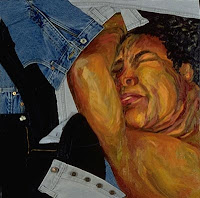
Oppression places the victim in a position of no control over their body, over their environment. This may result in obessive-compulsive types of behaviour as a way to regain control over their environment. They may exhibit symptoms of eating disorders, or the need to constantly structure their environment and lifestyle. They may chronically clean (their body or their environment), organize, or make lists. They make seek routine as a way of organizing or controlling their life. They may engage in self-harm activities, believing that they deserve punishment or as a way to reinforce the worthlessness that they were led to believe of themselves. This shows that violence does not end with the perpetrator but continues with the victim.

Perpetrators find ways of getting the victim to doubt their own sanity. Victims, in turn, doubt that anyone--even trained health professionals, police, or the justice system--would believe in the truthfulness of their experience. History shows that victims are trapped in a vicious cycle whereby they are abused twice over--once by their perpetrators and then by the very people they turn to for help--including policemen, judges, friends, and even relatives. Given that police have one of the highest rates of domestic violence and often do not receive adequate mental health/trauma training, it is understandable why they are not completely entrusted with the victim's experience.


It is common in abuse situations for victims to question their own reality. They develop a hard shell or dummy personality so that they can emotionally resist all that is happening to them. Some victims even have difficulty breaking communication with those that caused them harm. Many victims cannot even tell their parents, relatives, friends, coworkers, or neighbours about the abuse because of shame and humiliation, particularly in cases of low-grade chronic violence seen in situations of domestic abuse. In these situations, it is difficult for society to understand why victims remain in their situations, not realizing the brain-washing that occurs to convince the victim that it's their fault, it's for their own good, no one will believe them, or they are over-exaggerating. The victim then enters the perpetrator's reality, meaning that the abuse was normal and to be accepted. This may result in cognitive dissonance, which is the ability of the victim to simultaneously hold at least two opinions or beliefs that are logically or psychologically inconsistent. In some cases the person is aware of the contradiction. In other cases they are only conscious of the two beliefs separately, in different contexts. Also, people feel cognitive dissonance when they have performed actions that are inconsistent with their conscious beliefs. People who feel dissonance tend to try to reduce the dissonance by changing either one of their beliefs or their actions, such as victims convincing themselves that their abusers truly care about their wellbeing or victims believing that they instigated a rape. Contrary to untested popular belief, trauma survivors experiencing cognitive dissonance may engage in self-sabotaging behavior, but not suffer from low self-esteem.

Domestic violence often becomes a pattern made up of three stages depicting how love (for the partner), hope (that the relationship will get better), and fear (of retaliation for ending the relationship) keep the cycle in motion and make it hard to end a violent relationship. Perpetrators of violence often apologize, make promises to change, and pay special attention to their partners immediately following a violent incident. This period is sometimes referred to as the "honeymoon period" because of the positive feelings resulting from the release of tension and the hope that things will change for the better. This kind of spontaneous change rarely occurs, however, because the underlying pattern of control and lack of communication and compromise has not changed.

Every abusive person has a different set of signs that indirectly tells the partner an attack is about to happen. Examples may include unstable employment, pregnancy, and financial difficulty. Being aware of these “signs” can help a woman in an abusive relationship know when she will be attacked. Society also has not acknowledged the pattern of escalating danger to the victim when divorce or separation is sought.

It takes a victim a lifetime to clean off the defilement of a single act of rape or years of domestic abuse. Humiliation is closely associate with the feelings of shame, embarrassment, disgrace, and depreciation that are common reactions to violent actions. Victims may refuse to speak or only say what they think others--including police or loved ones--want to hear. When they choose to carefully share their story with someone of trust, they frequently share only a fraction of the their pain. They are vulnerable to emotional and physical pain when they retell their stories. They may hesitate to relate an event for fear that a fresh wave of suffering will surface and they will be reijured. Often they have gained significant insights that are barely holding them together. Some victims may be eager to share their story in order to heal, but cannot find a person of trust to divulge to. Others may not want to share how they are coping, lest doing so will make their strategies fail.


Sufferers do not suffer all the time. There are lapses when they can experience laughter, but ask them if they are truly happy and they may not be able to identify with that emotion. For a survivor to feel free to experience their emotions, they must be assured a safe forum. Like the majority of humans, trauma survivors want to feel loved and safe to love.

Traumatic events can be associated with positive changes in an individual's personality and behaviour. Many survivors choose to take the lessons learned from their personal experiences of violence to make positive contributions to society. They may provide direct assistance to other trauma victims, or get involved in activities that provide relief of suffering to others, humans and animals alike. Traumatized persons are not usually emotionally hardened by violence but are, in contrast, delicately attuned to the nuances of human interactions. They are extremely sensitive and empathetic to the plight of others.

Formulating new relationships is very difficult for survivors of trauma. Encounters with others open up the possibility of the unknown, particularly disappointment. There is a risk that the other person may not want to be intimately involved with someone who has survived trauma. Survivors experience this rejection as being revictimized--judged for experiences over which they had little control. Victims intensely fear rejection or that no one will have interest in their story. Telling their story is the centerpeice of the healing process, told in their words about the traumatic life events they have experienced and the impact of these events on their wellbeing.

References

Dutton, M.A. (1994). Post-traumatic therapy with domestic violence survivors. In M.B. Williams & J.F. Sommer (Eds.), Handbook of post-traumatic therapy (pp. 146-161). Westport, CT: Greenwood Press.

Dutton, M.A. (1992). Women's response to battering: Assessment and intervention. New York: Springer.

Foy, D.W. (1992). Introduction and description of the disorder. In D. W. Foy (Ed.), Treating PTSD: Cognitive-Behavioral strategies (pp 1-12). New York: Guilford.

Ganley, A. (1989). Integrating feminist and social learning analyses of aggression: Creating multiple models for intervention with men who battered. In P. Caesar & L. Hamberger (Eds.), Treating men who batter (pp. 196-235). New York: Springer.

Graham-Bermann, S. (1994). Preventing domestic violence. University of Michigan research information index. UM-Research-WEB@umich.edu.

McKay, M. (1994). The link between domestic violence and child abuse: Assessment and treatment considerations. Child Welfare League of America, 73, 29-39.

Meichenbaum, D. (1994). A clinical handbook/practical therapist manual for assessing and treating adults with post-traumatic stress disorder. Ontario, Canada: Institute Press.

Schwarz, R. (2002). Tools For Transforming Trauma. New York: Brunner-Routledge.

Van der Kolk, B. A., McFarlane, A. C. & Weisaeth, L., Editors. (1996). Traumatic Stress: The Effects of Overwhelming Experience on Mind, Body, and Society. New York: The Guilford Press.