Tone is a difficult thing to explain. Remember when your parents would say "Don't use that tone of voice with me?" Your feelings come across by the way you say something. It is easy to change your tone when you're speaking. When you're writing it's very hard to do. Setting the right tone in e-mail writing is more than just choosing the right wine to go with the meal. Tone in e-mail - how you say what you say - is so important because it is easy to misinterpret or overreact to email messages. I have learned this lesson the hard way quite recently. Having re-read certain emails written so long ago, I can clearly see how an email intended to convey one message could be misconstrued when read by a third-party. The outcome can be damaging.
A University of Chicago study published in the Journal of Personality and Social Psychology, shows that people overestimate their ability to convey tone in email messages. Study participants recorded messages vocally and wrote them in email messages. The message recipients' success rate at understanding the tone of the message was significantly higher verbally than via email. The reason for this communication disconnect, the researchers find, is egocentrism: the well-established social psychological phenomenon whereby people have a difficult time detaching themselves from their own perspectives and understanding how other people will interpret them.
According to the study I've only a 50-50 chance of ascertaining the tone of any e-mail message. The study also shows that people think they've correctly interpreted the tone of e-mails they receive 90 percent of the time. "People often think the tone or emotion in their messages is obvious because they 'hear' the tone they intend in their head as they write," Epley explains. At the same time, those reading messages unconsciously interpret them based on their current mood, stereotypes and expectations. Despite this, the research subjects thought they accurately interpreted the messages nine out of 10 times. This is a REALLY important point to keep in mind with any textual communication - be it email message, IM, blog or forum post. So many misunderstandings and hurt feelings and instances of offended or simply befuddled recipients could be avoided if we all assumed a little less that everyone knows we're teasing, joking or being sarcastic.
Because e-mail lacks the formatting of print, and the body language of in-person communication, the words themselves carry more feeling. And because e-mail messages are read quickly, an inappropriate tone can distract your reader and obstruct your message. "E-mail is very easy to misinterpret, which not only triggers flame wars but lots of litigation," says Nancy Flynn, executive director of the e-Policy Institute and author of guidebooks E-Mail Rules and Instant Messaging Rules. Many companies battle workplace lawsuits triggered by employee e-mail, according to Flynn.
Just let Humpty Dumpty be your guide, quoted here by Lewis Carroll: "When I use a word," Humpty Dumpty said in rather a scornful tone, "it means just what I choose it to mean--neither more nor less."
April 24, 2007


April 14, 2007
Assertiveness
How Assertive Are You?
Ask yourself the following questions.
Do you ask for help if you need it?
Do you express anger and annoyance appropriately?
Do you ask questions when you're confused?
Do you volunteer your opinions when you think or feel differently from others?
Do you speak up in class fairly frequently?
Are you able to say "no" when you don't want to do something?
Do you speak with a generally confident manner, communicating caring and strength?
Do you look at people when you're talking to them?
4 Types of Assertion
Basic Assertion
This is a simple, straightforward expression of your beliefs, feelings, or opinions. It's usually a simple "I want" or "I feel" statement.
Empathic Assertion
This conveys some sensitivity to the other person. It usually contains two parts- a recognition of the other person's situation or feelings, followed by a statement in which you stand up for your rights.
Example: "I know you've really been busy, but I want to feel that our relationship is important to you. I want you to make time for me and for us."
Escalating Assertion
This occurs when the other person fails to respond to your basic assertion and continues to violate your rights. You gradually escalate the assertion and become increasingly firm. It may even include the mention of some type of resulting action on your part, made only after several basic assertive statements.
Example, "If you don't complete the work on my car by 5:00 tomorrow, I'll be forced to call the Better Business Bureau."
I-Language Assertion
This is especially useful for expressing negative feelings. It involves a 3-part statement:
Example: When you didn't buy the groceries like yo said yo would, I couldn't cook the dinner for my parents. I feel hurt and angry with you. Next time, I'd like you to follow through when you agree to do something like. that."
The first step to developing assertiveness
Develop a value and belief system which allows you to assert yourself. This is the hardest part. It means giving yourself permission to be angry, to say "No," to ask for help, to make mistakes.
Ask yourself the following questions.
Do you ask for help if you need it?
Do you express anger and annoyance appropriately?
Do you ask questions when you're confused?
Do you volunteer your opinions when you think or feel differently from others?
Do you speak up in class fairly frequently?
Are you able to say "no" when you don't want to do something?
Do you speak with a generally confident manner, communicating caring and strength?
Do you look at people when you're talking to them?
4 Types of Assertion
Basic Assertion
This is a simple, straightforward expression of your beliefs, feelings, or opinions. It's usually a simple "I want" or "I feel" statement.
Empathic Assertion
This conveys some sensitivity to the other person. It usually contains two parts- a recognition of the other person's situation or feelings, followed by a statement in which you stand up for your rights.
Example: "I know you've really been busy, but I want to feel that our relationship is important to you. I want you to make time for me and for us."
Escalating Assertion
This occurs when the other person fails to respond to your basic assertion and continues to violate your rights. You gradually escalate the assertion and become increasingly firm. It may even include the mention of some type of resulting action on your part, made only after several basic assertive statements.
Example, "If you don't complete the work on my car by 5:00 tomorrow, I'll be forced to call the Better Business Bureau."
I-Language Assertion
This is especially useful for expressing negative feelings. It involves a 3-part statement:
- When you do . . . (describe the behavior).
- The effects are . . . (describe how the behavior concretely affects you).
- I'd prefer. . . (describe what you want).
Example: When you didn't buy the groceries like yo said yo would, I couldn't cook the dinner for my parents. I feel hurt and angry with you. Next time, I'd like you to follow through when you agree to do something like. that."
The first step to developing assertiveness
Develop a value and belief system which allows you to assert yourself. This is the hardest part. It means giving yourself permission to be angry, to say "No," to ask for help, to make mistakes.
April 1, 2007
Spousal Violence After Marital Separation
Research Highlights:
• According to the 1999 General Social Survey on Victimization, 28% of women and 22% of men who had been in contact with a previous spouse in the five years prior to the survey had experienced some type of violence by that partner, either while living together or after separation.
• Marital separation does not necessarily mark the end of a violent relationship. Forty percent of women and 32% of men with a former violent marriage or common-law relationship reported that violence occurred after the couple separated.
• Most of those who reported violence after separation stated that the assaults became more severe or began after separation. In 37% of cases the assaults did not increase in severity, in 24% the violence became more serious, and in 39% of cases the violence first began after the separation.
• Both women and men were more likely to have contact with the police when violence occurred after separation as
compared with other cases of spousal violence, but men were only about half as likely as women to report these incidents to the police (55% of women compared with 30% of men).
• Children are frequently the unintended observers of violence between spouses. Among those cases where violence occurred after separation, children were witnesses to at least one violent occurrence in 50% of cases.
• Women made up 77% of criminal harassment victims reported to police in 1999. Current or former husbands and boyfriends were offenders in about half of these incidents.
• Women have a heightened risk of homicide after marital separation. Between 1991 and 1999, separated women were killed by estranged partners at a rate of 39 per million couples. In comparison, an average of 26 women per million couples were killed by current common-law partners, and 5 women per million couples were killed by current husbands.
Risk of spousal homicide was lower on average for men, and men were at greater risk of homicide by a current commonlaw spouse than an ex-spouse. An average of 12 men per million couples were killed by a current common-law partner, 2 men per million couples were killed by an ex-partner, and 1 man per million couples was killed by a current marital partner.
• Men who killed an ex-partner were most often motivated by jealousy (44%), while arguments or quarrels (41%) most frequently motivated women.
• Estranged husbands were twice as likely as current husbands to have multiple victims. When marital relationships were still intact at the time of spousal homicides, children were the most likely victims other than the spouse. In estranged marriages, the victim’s new partner was the most frequent third party victim.
Police intervention
Police not aware of the majority of violent relationships
The majority of spousal assault victims do not contact the police for assistance. Incidents of spousal violence in current relationships were brought to the attention of the police in only 26% of cases involving female victims and 6%† of cases with male victims over the five-year period. Although seeking police assistance was more common among women and men assaulted by a previous partner (44% and 25% respectively), those who contacted the police remain a minority. The police were more likely to become aware of violent incidents when women experienced abuse after separation, which may be linked to the severity and persistence of violence experienced. In relationships with violence that continued or first occurred after separation, 55% of women reported having contact with the police compared with 37% if the violence ceased prior to separation. For men, the proportions with police contact were 30% and 23%, respectively.
Respondents who had police contact were asked if they thought the violence had increased in severity, decreased/stopped or stayed the same after police intervention. Both women and men were likely to report that the violence stopped after police contact (44% and 50%, respectively). Approximately 33% of women and 39% of men reported no change, and a minority (19% of women and 11% of men) reported an increase in violence. However, without accurate information about the outcome of police intervention (i.e. whether or not formal charges were laid, if the case was taken to court and prosecuted), it is difficult to assess whether it was simply police presence or a combination of factors that had an impact on subsequent violence.
Reasons for not reporting to police
The reasons given by women and men for not reporting the incident(s) to the police were that it was a personal matter (54% and 75%, respectively), it was dealt with another way (61% and 67%, respectively), and the victim did not want to involve the police (47% and 50%, respectively). Many women also indicated that they did not contact the police for fear of the abuser (34%). Further, women were more likely to report that fear of reprisal was taken into consideration when deciding whether or not to involve police when violence continued than
when violence ended at separation (45% and 28%, respectively).
References
* Research Program: This publication was produced with the financial support of the Research and Statistics Division, Justice Canada.
Browne, A. 1986. “Assault and Homicide at Home: When Battered Women Kill”. Advances in Applied Social Psychology 3:57-79.
Dauvergne, M. and H. Johnson. 2001. “Children Witnessing Family Violence”. Juristat. Statistics Canada Vol. 21, No. 6. Ottawa: Canadian Centre for Justice Statistics.
Department of Justice, Canada. September, 1999. A Handbook for Police and Crown Prosecutors on Criminal Harassment. Ottawa: Communications and Executive Services Branch, Department of Justice Canada.
Edleson, J.L. 1999. “Children’s witnessing of adult domestic violence.” Journal of Interpersonal Violence 6: 526-534.
Fantuzzo, J.W., L.J. Depaola, L.Lambert, T. Martino, G. Anderson, and S. Sutton. 1991. Effects of interpersonal violence on the psychological adjustiment and competencies of young children.
Journal of Consulting and Clinical Psychology 59: 258-265.
Follingstad, D., L. Rutledge, B. Berg, E. Hause, and D. Polek. 1990. “The Role of Emotional Abuse in Physically Abusive Relationships.” Journal of Family Violence 5(2): 107-120.
March 19, 2007
Charging an Abuser
In Ontario, police and Crown counsel operate under a provincial government directive requiring that a charge be laid wherever there is any evidence that a domestic assault has occurred. Being married does not protect an abuser. A husband can be charged with sexually assaulting his wife. Given that men are generally the assaulters and women generally the assaultees, it stands to reason that men are more often charged than women. Your partner can also be charged and prosecuted for past episodes of violence.

This directive was issued so that women would not be the ones deciding whether or not a charge should be laid. Leaving such a decision to the victim would clearly compromise her safety at the hands of her assaulter/partner and leave her susceptible to being coerced into dropping the charges.
These goals may or may not have been achieved through the use of this directive. Certainly more charges are laid now, but women remain vulnerable to their assaulters. While they cannot be coerced into dropping the charges because that is a decision to be made by the Crown alone, they can be coerced, particularly where there is a history or fear of violence, into changing their testimony and denying the statement given to the police at the time of the assault. Technically, women can end up being charged themselves, with mischief or obstructing justice, if they recant on the witness stand what they have told the police in their original statement.
This directive and others like it across Canada are guided by a general societal commitment to ending violence against women and children. Even so, wife assault remains a significantly under-reported crime. Almost always a woman is assaulted many times before there is police involvement, so when the man is charged it is unlikely to be the first assault of the relationship. Charges too often result in a guilty plea to a lesser charge and a minimal penalty for the perpetrator.
Where the charge proceeds to a trial and results in a finding of guilt, penalties are still generally in the "slap on the wrist" category unless the accused is a many-time repeat offender. Probation is the most likely sentence, but probation officers are overworked and are not able to maintain an adequate level of supervision. There is a dearth of appropriate counselling available to men, even if they are ordered by the judge to participate. Increasingly, Crowns attempt to "mediate" by sending first time charges to alternative dispute resolution or by asking the victim if she would accept having the charge withdrawn if the perpetrator consents to a peace bond.
What happens if my partner breaks a condition?
If your partner does not obey the conditions, call the police. He may be charged with another criminal offence known as “breach of recognizance” or “failure to comply with a condition of undertaking or recognizance”.
What if the police do not lay charges?
If the police do not lay charges, ask them why. Ask to speak to another officer, such as the officer in charge of the station or the domestic violence co-ordinator if there is one. If you are not satisfied with their response, make a note of their names and badge numbers. You can
make a complaint to the Ontario Civilian Commission of Police Services. You should get advice from a lawyer or a community legal clinic before you do this.
Laying a charge yourself
You can lay a charge against your partner yourself for an assault that has just happened or that occurred in the past, whether or not the police were called at the time. If the police were called and they did not lay a charge, they should have made an “occurrence report”. You can use this report to lay a charge yourself, but you do not need to have one to lay a charge. Act as soon as possible after the assault because the court may question why you waited. There is usually a six-month deadline to lay the charge.
ONTARIO WOMEN'S JUSTICE NETWORK 158 Spadina Road, Toronto, ON Canada M5R 2T8

This directive was issued so that women would not be the ones deciding whether or not a charge should be laid. Leaving such a decision to the victim would clearly compromise her safety at the hands of her assaulter/partner and leave her susceptible to being coerced into dropping the charges.
These goals may or may not have been achieved through the use of this directive. Certainly more charges are laid now, but women remain vulnerable to their assaulters. While they cannot be coerced into dropping the charges because that is a decision to be made by the Crown alone, they can be coerced, particularly where there is a history or fear of violence, into changing their testimony and denying the statement given to the police at the time of the assault. Technically, women can end up being charged themselves, with mischief or obstructing justice, if they recant on the witness stand what they have told the police in their original statement.
This directive and others like it across Canada are guided by a general societal commitment to ending violence against women and children. Even so, wife assault remains a significantly under-reported crime. Almost always a woman is assaulted many times before there is police involvement, so when the man is charged it is unlikely to be the first assault of the relationship. Charges too often result in a guilty plea to a lesser charge and a minimal penalty for the perpetrator.
Where the charge proceeds to a trial and results in a finding of guilt, penalties are still generally in the "slap on the wrist" category unless the accused is a many-time repeat offender. Probation is the most likely sentence, but probation officers are overworked and are not able to maintain an adequate level of supervision. There is a dearth of appropriate counselling available to men, even if they are ordered by the judge to participate. Increasingly, Crowns attempt to "mediate" by sending first time charges to alternative dispute resolution or by asking the victim if she would accept having the charge withdrawn if the perpetrator consents to a peace bond.
What happens if my partner breaks a condition?
If your partner does not obey the conditions, call the police. He may be charged with another criminal offence known as “breach of recognizance” or “failure to comply with a condition of undertaking or recognizance”.
What if the police do not lay charges?
If the police do not lay charges, ask them why. Ask to speak to another officer, such as the officer in charge of the station or the domestic violence co-ordinator if there is one. If you are not satisfied with their response, make a note of their names and badge numbers. You can
make a complaint to the Ontario Civilian Commission of Police Services. You should get advice from a lawyer or a community legal clinic before you do this.
Laying a charge yourself
You can lay a charge against your partner yourself for an assault that has just happened or that occurred in the past, whether or not the police were called at the time. If the police were called and they did not lay a charge, they should have made an “occurrence report”. You can use this report to lay a charge yourself, but you do not need to have one to lay a charge. Act as soon as possible after the assault because the court may question why you waited. There is usually a six-month deadline to lay the charge.
To lay a charge, you must see a Justice of the Peace. Call your local courthouse or look in the government blue pages of your phone book under Courts/Ontario Courts/Justices of the Peace, to find out where to go. Try to get there as early in the morning as possible because people are seen in the order that they arrive. You will have to tell the Justice of the Peace what happened. Be as specific and detailed as possible about the events that are the subject of the charge. If
you kept a written record, refer to it to refresh your memory. If you were threatened, try to provide the exact words used in the threat. Bring any other evidence you have such as photos, tape recordings, or medical reports. Tell the Justice of the Peace if there were any witnesses.
The Justice of the Peace will give you a date to appear in court to explain why you want to lay a
charge. If you have witnesses, you can bring them on that date. If they are not able or willing to go, tell the Justice of the Peace about them.
ONTARIO WOMEN'S JUSTICE NETWORK 158 Spadina Road, Toronto, ON Canada M5R 2T8
Domestic Assault: Are Prosecutions Fair? A Survivor Answers
February 2006
I was the victim of a domestic assault. The accused was acquitted recently.
Q. How many times was the woman assaulted before a first charge was laid against her male partner?
A. This was the second time, but I was already fearful of my partner. He said on a number of occasions that he could kill me so despite the physical violence there was emotional turmoil as well.
Q. Was he removed from the scene of the assault to be charged?
A. Yes
Q. Was he handcuffed or otherwise restrained?
A. Yes. The whole thing was traumatic though since I had no idea what would happen after calling 911. None at all.
Q. Was she able to give her statement to the police without the assaulter nearby?
A. Well here-in lies the problem. I didn't understand what the statement would be used for and fearing that I was in enough trouble already from my partner, I declined to give one (an official statement that is). However I co-operated fully with the police on the scene and gave them lots of evidence then.
Q. Did the police advise her of services available to assist/support her?
A. No. But I was later contacted by the Victim Witness program.
Q. Was she asked about any history of abuse when she gave her statement?
A. No. In fact because I was forth-coming with evidence on the scene the police may have not done as thorough of a job. They assumed that I would give an official statement I suppose.
Q. Was she encouraged to accept a peace bond or to enter into alternate dispute resolution?
A. No.
Q. If her assaulter was released on condition that he stay away from her, how helpful were the police in enforcing this condition?
A. Assaulter was restricted 500 m from the house and my place of business. Permitted third party contact only. We had no issues.
Q. Did her assaulter attempt to get her to change her story before trial?
A. I believe the assaulter tricked me into not giving a statement. I was told that a criminal record would affect his job and employability. He told others that he cared about me and wanted to come back. Because his job is most important to him, I was extremely fearful of doing anything more to antagonize him. He was already annoyed that I had dialed 911.
Did I change my story? No and I never would. But I had no one to help me understand what his story might be or the angle he might use to get off of the charges. Had I known that I might have focused on those areas and his story would have seemed less plausible.
A final comment to the Crown:
As a victim I felt I had no real representation. I felt like I was almost naked on the stand and was an emotional mess. My explanation of the truth could never come across as good as the story he made up to fit the evidence. His story was carefully thought-out, rehearsed and planned. My testimony was really just a nightmare relived without the supporting details that would have given it the credibility it required. If the Crown are going to lay charges and make the assaulter angry, it would be nice that they try harder to get a conviction. He was definitely guilty, but he used the standard defence of 'self-defence' and an accident to explain away the violence. Now he seems to think his acquittal is proof of his innocence. If I don't go along with him he will be hauling me into family court. He has the money to "officially" harass me. I suspect I'm safe physically, but I can't ever be sure of that.
I was the victim of a domestic assault. The accused was acquitted
 recently.
Q. How many times was the woman assaulted before a first charge was laid against her male partner?
A. This was the second time, but I was already fearful of my partner. He said on a number of occasions that he could kill me so despite the physical violence there was emotional turmoil as well.
Q. Was he removed from the scene of the assault to be charged?
A. Yes
Q. Was he handcuffed or otherwise restrained?
A. Yes. The whole thing was traumatic though since I had no idea what would happen after calling 911. None at all.
Q. Was she able to give her statement to the police without the assaulter nearby?
A. Well here-in lies the problem. I didn't understand what the statement would be used for and fearing that I was in enough trouble already from my partner, I declined to give one (an official statement that is). However I co-operated fully with the police on the scene and gave them lots of evidence then.
Q. Did the police advise her of services available to assist/support her?
A. No. But I was later contacted by the Victim Witness program.
Q. Was she asked about any history of abuse when she gave her statement?
A. No. In fact because I was forth-coming with evidence on the scene the police may have not done as thorough of a job. They assumed that I would give an official statement I suppose.
Q. Was she encouraged to accept a peace bond or to enter into alternate dispute resolution?
A. No.
Q. If her assaulter was released on condition that he stay away from her, how helpful were the police in enforcing this condition?
A. Assaulter was restricted 500 m from the house and my place of business. Permitted third party contact only. We had no issues.
Q. Did her assaulter attempt to get her to change her story before trial?
A. I believe the assaulter tricked me into not giving a statement. I was told that a criminal record would affect his job and employability. He told others that he cared about me and wanted to come back. Because his job is most important to him, I was extremely fearful of doing anything more to antagonize him. He was already annoyed that I had dialed 911.
Did I change my story? No and I never would. But I had no one to help me understand what his story might be or the angle he might use to get off of the charges. Had I known that I might have focused on those areas and his story would have seemed less plausible.
A final comment to the Crown:
As a victim I felt I had no real representation. I felt like I was almost naked on the stand and was an emotional mess. My explanation of the truth could never come across as good as the story he made up to fit the evidence. His story was carefully thought-out, rehearsed and planned. My testimony was really just a nightmare relived without the supporting details that would have given it the credibility it required. If the Crown are going to lay charges and make the assaulter angry, it would be nice that they try harder to get a conviction. He was definitely guilty, but he used the standard defence of 'self-defence' and an accident to explain away the violence. Now he seems to think his acquittal is proof of his innocence. If I don't go along with him he will be hauling me into family court. He has the money to "officially" harass me. I suspect I'm safe physically, but I can't ever be sure of that.
References:
Ontario Women's Justice Network. 158 Spadina Road, Toronto, ON Canada M5R 2T8tel: (416) 392-3135 TTY: (416) 392-3031 fax: (416) 392-3136 email: owjn@web.ca
March 4, 2007
Dreams
I had another confusing dream last night. The same woman from my dream several nights ago, professing to be an 'isangoma,' (I thought she previously called herself a 'sangoma') was present, once again luring me to her mountain-eclipsed coastal land with outstretched arms. She dressed me in a red cloth, pointed to my lower back, and said 'ukuthwasa' several times, possibly seven times. We stood on the same red dirt I recall from my last dream. She had beads in her hair and wore the same colourful bracelets. I felt at peace. I felt my grandfather's reassuring presence. It felt so real. In this dream, she kept calling me 'thwasas.' When I heard these words, I could also see them clearly before me. Prior to awakening, I recall her saying softly,"You can see. You've always seen." Then I awoke suddenly in a sweat.
I have no idea what these dreams mean. I don't know if this is a real language, or if I have actually misspelled any of the words I am certain I heard. I am intrigued that there exists consistency between these two dreams. Once again, if any readers have possible suggestions as to what these words mean, or the possible interpretation of these two dreams, please email me or provide a comment.
I have no idea what these dreams mean. I don't know if this is a real language, or if I have actually misspelled any of the words I am certain I heard. I am intrigued that there exists consistency between these two dreams. Once again, if any readers have possible suggestions as to what these words mean, or the possible interpretation of these two dreams, please email me or provide a comment.
Trauma: violence and assault
The following excerpts are from recent readings of trauma:
Domestic violence is control by one partner over another in a dating, marital or live-in relationship. Domestic violence includes physical abuse, sexual abuse, psychological abuse, and abuse to property and pets. Exposure to this form of violence has considerable potential to be perceived as life-threatening by those victimized and can leave them with a sense of vulnerability, helplessness, and in extreme cases, horror. Physical abuse refers to any behavior that involves the intentional use of force against the body of another person that risks physical injury, harm, and/or pain. Physical abuse includes pushing, hitting, slapping, choking, using an object to hit, twisting of a body part, forcing the ingestion of an unwanted substance, and use of a weapon. Sexual abuse is defined as any unwanted sexual intimacy forced on one individual by another. It may include oral, anal, or vaginal stimulation or penetration, forced nudity, forced exposure to sexually explicit material or activity, or any other unwanted sexual activity. Compliance may be obtained through actual or threatened physical force or through some other form of coercion. Psychological abuse may include derogatory statements or threats of further abuse (e.g., threats of being killed by another individual). It may also involve isolation, economic threats, and emotional abuse. Survivors face many obstacles in trying to end the abuse in their lives. The victim may face psychological and economic entrapment, physical isolation and lack of social support, religious and cultural values, fear of social judgment, threats and intimidation over custody or separation, immigration status or disabilities and lack of viable alternatives.
Abusers often starts insidiously and may be difficult to recognize. Early on, a partner may seem attentive, generous and protective in ways that later turn out to be frightening and controlling. Initially the abuse is isolated incidents for which the partner expresses remorse and promises never to do again or rationalizes as being due to stress or caused by something you did or didn’t do.
Traumatic stress is produced by exposure to events that are so extreme or severe and threatening, that they demand extraordinary coping efforts. Such events are often unpredicted and uncontrollable. They overwhelm a person's sense of safety and security. Terr (1991) has described "Type I" and "Type II" traumatic events. Traumatic exposure may take the form of single, short-term event (e.g., rape, assault, severe beating) and can be referred to as "Type I" trauma. Traumatic events can also involve repeated or prolonged exposure (e.g., chronic victimization such as child sexual abuse, battering); this is referred to as "Type II" trauma. Research suggests that this latter form of exposure tends to have greater impact on the individual's functioning. Domestic violence is typically ongoing and therefore, may fit the criteria for a Type II traumatic event.
Violence causes invisibile wounds. Society does not appreciate the full range of human experience that exists alongside tragic events. Many traumatized people suffer a divide in their conscious minds. The mind stuggles to maintain its sanity by cracking in two: one half holding on to all it previously believed in, and the other half turning toward the chaos of anniilation. The victim suffers the excruciating pain of trying to survive with both minds intact, the mind of 'hope' struggling to avoid dominance by the mind of 'despair.' This struggle continues long after the trauma has subsided.
When oppressed, people are capable of detaching their emotions and thoughts from their physical body. They can withdraw into themselves so that they 'saw nothing, heard nothing, and spoke nothing.' They can behave like ragdolls, having no reaction to what occurs around them.
Many victims of trauma, when asked how they feel at a particular time, describe feelings of emptiness or being numb. Some victims have difficulty showing emotion, or identifying their emotion. They may appear like a blank slate, or they may constantly hide behind a smile as a way to shield others from sensing their despair. Often, victims of trauma have difficulty reacting to the trauma of others. They are able to survive day to day by being great pretenders.
Responses to traumatic experiences can be divided into at least four categories (Meichenbaum, 1994). Emotional responses include shock, terror, guilt, horror, irritability, anxiety, hostility, and depression. Cognitive responses are reflected in significant concentration impairment, confusion, self-blame, intrusive thoughts about the traumatic experience(s) (also referred to as flashbacks), lowered self-efficacy, fears of losing control, and fear of reoccurrence of the trauma. Biologically-based responses involve sleep disturbance (i.e., insomnia), nightmares, an exaggerated startle response, and psychosomatic symptoms. Behavioral responses include avoidance, social withdrawal, interpersonal stress (decreased intimacy and lowered trust in others), and substance abuse. The process through which the individual has coped prior to the trauma is arrested; consequently, a sense of helplessness is often maintained (Foy, 1992).
Domestic violence leaves the injured feeling that they deserved their punishment.
Sexual assault leaves the injured feeling that they are unclean and need to be cleansed.
Violence's major message: "You are nothing. You are worthless."
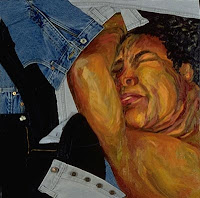 Oppression places the victim in a position of no control over their body, over their environment. This may result in obessive-compulsive types of behaviour as a way to regain control over their environment. They may exhibit symptoms of eating disorders, or the need to constantly structure their environment and lifestyle. They may chronically clean (their body or their environment), organize, or make lists. They make seek routine as a way of organizing or controlling their life. They may engage in self-harm activities, believing that they deserve punishment or as a way to reinforce the worthlessness that they were led to believe of themselves. This shows that violence does not end with the perpetrator but continues with the victim.
Perpetrators find ways of getting the victim to doubt their own sanity. Victims, in turn, doubt that anyone--even trained health professionals, police, or the justice system--would believe in the truthfulness of their experience. History shows that victims are trapped in a vicious cycle whereby they are abused twice over--once by their perpetrators and then by the very people they turn to for help--including policemen, judges, friends, and even relatives. Given that police have one of the highest rates of domestic violence and often do not receive adequate mental health/trauma training, it is understandable why they are not completely entrusted with the victim's experience.
 It is common in abuse situations for victims to question their own reality. They develop a hard shell or dummy personality so that they can emotionally resist all that is happening to them. Some victims even have difficulty breaking communication with those that caused them harm. Many victims cannot even tell their parents, relatives, friends, coworkers, or neighbours about the abuse because of shame and humiliation, particularly in cases of low-grade chronic violence seen in situations of domestic abuse. In these situations, it is difficult for society to understand why victims remain in their situations, not realizing the brain-washing that occurs to convince the victim that it's their fault, it's for their own good, no one will believe them, or they are over-exaggerating. The victim then enters the perpetrator's reality, meaning that the abuse was normal and to be accepted. This may result in cognitive dissonance, which is the ability of the victim to simultaneously hold at least two opinions or beliefs that are logically or psychologically inconsistent. In some cases the person is aware of the contradiction. In other cases they are only conscious of the two beliefs separately, in different contexts. Also, people feel cognitive dissonance when they have performed actions that are inconsistent with their conscious beliefs. People who feel dissonance tend to try to reduce the dissonance by changing either one of their beliefs or their actions, such as victims convincing themselves that their abusers truly care about their wellbeing or victims believing that they instigated a rape. Contrary to untested popular belief, trauma survivors experiencing cognitive dissonance may engage in self-sabotaging behavior, but not suffer from low self-esteem.
 Domestic violence often becomes a pattern made up of three stages depicting how love (for the partner), hope (that the relationship will get better), and fear (of retaliation for ending the relationship) keep the cycle in motion and make it hard to end a violent relationship. Perpetrators of violence often apologize, make promises to change, and pay special attention to their partners immediately following a violent incident. This period is sometimes referred to as the "honeymoon period" because of the positive feelings resulting from the release of tension and the hope that things will change for the better. This kind of spontaneous change rarely occurs, however, because the underlying pattern of control and lack of communication and compromise has not changed.
Every abusive person has a different set of signs that indirectly tells the partner an attack is about to happen. Examples may include unstable employment, pregnancy, and financial difficulty. Being aware of these “signs” can help a woman in an abusive relationship know when she will be attacked. Society also has not acknowledged the pattern of escalating danger to the victim when divorce or separation is sought.
It takes a victim a lifetime to clean off the defilement of a single act of rape or years of domestic abuse. Humiliation is closely associate with the feelings of shame, embarrassment, disgrace, and depreciation that are common reactions to violent actions. Victims may refuse to speak or only say what they think others--including police or loved ones--want to hear. When they choose to carefully share their story with someone of trust, they frequently share only a fraction of the their pain. They are vulnerable to emotional and physical pain when they retell their stories. They may hesitate to relate an event for fear that a fresh wave of suffering will surface and they will be reijured. Often they have gained significant insights that are barely holding them together. Some victims may be eager to share their story in order to heal, but cannot find a person of trust to divulge to. Others may not want to share how they are coping, lest doing so will make their strategies fail.
Domestic violence is control by one partner over another in a dating, marital or live-in relationship. Domestic violence includes physical abuse, sexual abuse, psychological abuse, and abuse to property and pets. Exposure to this form of violence has considerable potential to be perceived as life-threatening by those victimized and can leave them with a sense of vulnerability, helplessness, and in extreme cases, horror. Physical abuse refers to any behavior that involves the intentional use of force against the body of another person that risks physical injury, harm, and/or pain. Physical abuse includes pushing, hitting, slapping, choking, using an object to hit, twisting of a body part, forcing the ingestion of an unwanted substance, and use of a weapon. Sexual abuse is defined as any unwanted sexual intimacy forced on one individual by another. It may include oral, anal, or vaginal stimulation or penetration, forced nudity, forced exposure to sexually explicit material or activity, or any other unwanted sexual activity. Compliance may be obtained through actual or threatened physical force or through some other form of coercion. Psychological abuse may include derogatory statements or threats of further abuse (e.g., threats of being killed by another individual). It may also involve isolation, economic threats, and emotional abuse. Survivors face many obstacles in trying to end the abuse in their lives. The victim may face psychological and economic entrapment, physical isolation and lack of social support, religious and cultural values, fear of social judgment, threats and intimidation over custody or separation, immigration status or disabilities and lack of viable alternatives.
Abusers often starts insidiously and may be difficult to recognize. Early on, a partner may seem attentive, generous and protective in ways that later turn out to be frightening and controlling. Initially the abuse is isolated incidents for which the partner expresses remorse and promises never to do again or rationalizes as being due to stress or caused by something you did or didn’t do.
Traumatic stress is produced by exposure to events that are so extreme or severe and threatening, that they demand extraordinary coping efforts. Such events are often unpredicted and uncontrollable. They overwhelm a person's sense of safety and security. Terr (1991) has described "Type I" and "Type II" traumatic events. Traumatic exposure may take the form of single, short-term event (e.g., rape, assault, severe beating) and can be referred to as "Type I" trauma. Traumatic events can also involve repeated or prolonged exposure (e.g., chronic victimization such as child sexual abuse, battering); this is referred to as "Type II" trauma. Research suggests that this latter form of exposure tends to have greater impact on the individual's functioning. Domestic violence is typically ongoing and therefore, may fit the criteria for a Type II traumatic event.
Violence causes invisibile wounds. Society does not appreciate the full range of human experience that exists alongside tragic events. Many traumatized people suffer a divide in their conscious minds. The mind stuggles to maintain its sanity by cracking in two: one half holding on to all it previously believed in, and the other half turning toward the chaos of anniilation. The
 victim suffers the excruciating pain of trying to survive with both minds intact, the mind of 'hope' struggling to avoid dominance by the mind of 'despair.' This struggle continues long after the trauma has subsided.
When oppressed, people are capable of detaching their emotions and thoughts from their physical body. They can withdraw into themselves so that they 'saw nothing, heard nothing, and spoke nothing.' They can behave like ragdolls, having no reaction to what occurs around them.
Many victims of trauma, when asked how they feel at a particular time, describe feelings of emptiness or being numb. Some victims have difficulty showing emotion, or identifying their emotion. They may appear like a blank slate, or they may constantly hide behind a smile as a way to shield others from sensing their despair. Often, victims of trauma have difficulty reacting to the trauma of others. They are able to survive day to day by being great pretenders.
Responses to traumatic experiences can be divided into at least four categories (Meichenbaum, 1994). Emotional responses include shock, terror, guilt, horror, irritability, anxiety, hostility, and depression. Cognitive responses are reflected in significant concentration impairment, confusion, self-blame, intrusive thoughts about the traumatic experience(s) (also referred to as flashbacks), lowered self-efficacy, fears of losing control, and fear of reoccurrence of the trauma. Biologically-based responses involve sleep disturbance (i.e., insomnia), nightmares, an exaggerated startle response, and psychosomatic symptoms. Behavioral responses include avoidance, social withdrawal, interpersonal stress (decreased intimacy and lowered trust in others), and substance abuse. The process through which the individual has coped prior to the trauma is arrested; consequently, a sense of helplessness is often maintained (Foy, 1992).
Domestic violence leaves the injured feeling that they deserved their punishment.
Sexual assault leaves the injured feeling that they are unclean and need to be cleansed.
Violence's major message: "You are nothing. You are worthless."
 Oppression places the victim in a position of no control over their body, over their environment. This may result in obessive-compulsive types of behaviour as a way to regain control over their environment. They may exhibit symptoms of eating disorders, or the need to constantly structure their environment and lifestyle. They may chronically clean (their body or their environment), organize, or make lists. They make seek routine as a way of organizing or controlling their life. They may engage in self-harm activities, believing that they deserve punishment or as a way to reinforce the worthlessness that they were led to believe of themselves. This shows that violence does not end with the perpetrator but continues with the victim.
Perpetrators find ways of getting the victim to doubt their own sanity. Victims, in turn, doubt that anyone--even trained health professionals, police, or the justice system--would believe in the truthfulness of their experience. History shows that victims are trapped in a vicious
 cycle whereby they are abused twice over--once by their perpetrators and then by the very people they turn to for help--including policemen, judges, friends, and even relatives. Given that police have one of the highest rates of domestic violence and often do not receive adequate mental health/trauma training, it is understandable why they are not completely entrusted with the victim's experience.
 It is common in abuse situations for victims to question their own reality. They develop a hard shell or dummy personality so that they can emotionally resist all that is happening to them. Some victims even have difficulty breaking communication with those that caused them harm. Many victims cannot even tell their parents, relatives, friends, coworkers, or neighbours about the abuse because of shame and humiliation, particularly in cases of low-grade chronic violence seen in situations of domestic abuse. In these situations, it is difficult for society to understand why victims remain in their situations, not realizing the brain-washing that occurs to convince the victim that it's their fault, it's for their own good, no one will believe them, or they are over-exaggerating. The victim then enters the perpetrator's reality, meaning that the abuse was normal and to be accepted. This may result in cognitive dissonance, which is the ability of the victim to simultaneously hold at least two opinions or beliefs that are logically or psychologically inconsistent. In some cases the person is aware of the contradiction. In other cases they are only conscious of the two beliefs separately, in different contexts. Also, people feel cognitive dissonance when they have performed actions that are inconsistent with their conscious beliefs. People who feel dissonance tend to try to reduce the dissonance by changing either one of their beliefs or their actions, such as victims convincing themselves that their abusers truly care about their wellbeing or victims believing that they instigated a rape. Contrary to untested popular belief, trauma survivors experiencing cognitive dissonance may engage in self-sabotaging behavior, but not suffer from low self-esteem.
 Domestic violence often becomes a pattern made up of three stages depicting how love (for the partner), hope (that the relationship will get better), and fear (of retaliation for ending the relationship) keep the cycle in motion and make it hard to end a violent relationship. Perpetrators of violence often apologize, make promises to change, and pay special attention to their partners immediately following a violent incident. This period is sometimes referred to as the "honeymoon period" because of the positive feelings resulting from the release of tension and the hope that things will change for the better. This kind of spontaneous change rarely occurs, however, because the underlying pattern of control and lack of communication and compromise has not changed.
Every abusive person has a different set of signs that indirectly tells the partner an attack is about to happen. Examples may include unstable employment, pregnancy, and financial difficulty. Being aware of these “signs” can help a woman in an abusive relationship know when she will be attacked. Society also has not acknowledged the pattern of escalating danger to the victim when divorce or separation is sought.
It takes a victim a lifetime to clean off the defilement of a single act of rape or years of domestic abuse. Humiliation is closely associate with the feelings of shame, embarrassment, disgrace, and depreciation that are common reactions to violent actions. Victims may refuse to speak or only say what they think others--including police or loved ones--want to hear. When they choose to carefully share their story with someone of trust, they frequently share
 only a fraction of the their pain. They are vulnerable to emotional and physical pain when they retell their stories. They may hesitate to relate an event for fear that a fresh wave of suffering will surface and they will be reijured. Often they have gained significant insights that are barely holding them together. Some victims may be eager to share their story in order to heal, but cannot find a person of trust to divulge to. Others may not want to share how they are coping, lest doing so will make their strategies fail.
Sufferers do not suffer all the time. There are lapses when they can experience laughter, but ask them if they are truly happy and they may not be able to identify with that emotion. For a survivor to feel free to experience their emotions, they must be assured a safe forum. Like the majority of humans, trauma survivors want to feel loved and safe to love.
Traumatic events can be associated with positive changes in an individual's personality and behaviour. Many survivors choose to take the lessons learned from their personal experiences of violence to make positive contributions to society. They may provide direct assistance to other trauma victims, or get involved in activities that provide relief of suffering to others, humans and animals alike. Traumatized persons are not usually emotionally hardened by violence but are, in contrast, delicately attuned to the nuances of human interactions. They are extremely sensitive and empathetic to the plight of others.
Formulating new relationships is very difficult for survivors of trauma. Encounters with others open up the possibility of the unknown, particularly disappointment. There is a risk that the other person may not want to be intimately involved with someone who has survived trauma. Survivors experience this rejection as being revictimized--judged for experiences over which they had little control. Victims intensely fear rejection or that no one will have interest in their story. Telling their story is the centerpeice of the healing process, told in their words about the traumatic life events they have experienced and the impact of these events on their wellbeing.
References
Dutton, M.A. (1994). Post-traumatic therapy with domestic violence survivors. In M.B. Williams & J.F. Sommer (Eds.), Handbook of post-traumatic therapy (pp. 146-161). Westport, CT: Greenwood Press.
Dutton, M.A. (1992). Women's response to battering: Assessment and intervention. New York: Springer.
Foy, D.W. (1992). Introduction and description of the disorder. In D. W. Foy (Ed.), Treating PTSD: Cognitive-Behavioral strategies (pp 1-12). New York: Guilford.
Ganley, A. (1989). Integrating feminist and social learning analyses of aggression: Creating multiple models for intervention with men who battered. In P. Caesar & L. Hamberger (Eds.), Treating men who batter (pp. 196-235). New York: Springer.
Graham-Bermann, S. (1994). Preventing domestic violence. University of Michigan research information index. UM-Research-WEB@umich.edu.
McKay, M. (1994). The link between domestic violence and child abuse: Assessment and treatment considerations. Child Welfare League of America, 73, 29-39.
Meichenbaum, D. (1994). A clinical handbook/practical therapist manual for assessing and treating adults with post-traumatic stress disorder. Ontario, Canada: Institute Press.
Schwarz, R. (2002). Tools For Transforming Trauma. New York: Brunner-Routledge.
Van der Kolk, B. A., McFarlane, A. C. & Weisaeth, L., Editors. (1996). Traumatic Stress: The Effects of Overwhelming Experience on Mind, Body, and Society. New York: The Guilford Press.
March 3, 2007
Fundamental Principles
 Virtue, good conduct, and morality--these practices are guided by fundamental principles. Developing my mind is my path to wisdom, which in turn leads to personal freedom. This also strengthens and controls my mind, helping me to maintain good conduct.
"The greatest achievement is selflessness. The greatest worth is self-mastery. The greatest quality is seeking to serve others. The greatest precept is continual awareness. The greatest medicine is the emptiness of everything. The greatest action is not conforming with the worlds ways. The greatest magic is transmuting the passions. The greatest generosity is non-attachment. The greatest goodness is a peaceful mind. The greatest patience is humility. The greatest effort is not concerned with results. The greatest meditation is a mind that lets go. The greatest wisdom is seeing through appearances."
-Atisha.
March 1, 2007
Dreams
I had a dream last night. The way it came to me leads me to believe it is significant. I can't make sense of it.
I saw a woman who identified herself as a "sangoma" set against a backdrop of costal mountains. I noticed she wore bracelets of red, black, and white beads (the same colours of my national flag). She extended her hand to me. I reached out and held it, and I was pulled towards where she stood on her land. We entered a steam room "for purification," she said. I remember feeling internally cleansed and at peace. "Heal," she said several times. She made a sudden move with her hand, and I saw bones scatter across the red dirt, at which point I heard drumming and chanting (I could not see their origin). When I looked at the floor again, I saw four tablets, which I sensed to be ivory or some type of bone.
The sangoma brought herself into a trance and began to speak. I wish I could recall all that she said. I sensed a deep understanding from her--not judgement. There was calmness in her voice. She said "ulas" and then scrolled several words in the red dirt which, to my amazement, I can recall clearly: "othandweni na," "zidela," and "injabulo." She then disappeared and I awoke immediately.
If anyone has any idea as to the interpretation of this dream, or what these words could mean, please provide your comment to my post.
February 24, 2007
Capability of Loving Another
"For one human being to love another: this is perhaps the most difficult of our tasks; the ultimate, the last test and proof, the work for which all other work is but preparation."
-Rainer Maria Rilke, poet
To love and be loved is the greatest happiness of existence
"A woman can forgive a man for the harm he does her…but she can never forgive him for the sacrifices he makes on her account."
-W.Somerset Maugham, writer
"There is always some madness in love. But there is also always some reason in madness."
-Friedrich Nietzsche, philosopher
"Treasure the love you receive above all. It will survive long after your gold and good health have vanished."
-Og Mandino, writer and lecturer
"Understanding is the essence of love."
-Thich Nhat Hanh, Buddhist monk and writer
"The essence of love is kindness."
-Robert Louis Stevenson, writer
"When the power of love overcomes the love of power, the world will know peace."
-Jimi Hendrix, musician
"They say a person needs just three things to be truly happy in this world: someone to love, something to do, and something to hope for."
-Tom Bodett, writer and radio host
Courage under Fire
"Being deeply loved by someone gives you strength, while loving someone deeply gives you courage."
-Lao Tzu, philosopher
I have reflected on this quote over the last two months, and on my outlook on close relationships. I learned about love via being the recipient of unconditional love from my family. Their love made me feel as if I were the most important person in their eyes, and gave me the strength to take risks in discovering my authentic self. Their love has taught me to love others without expectation or reservation, to create a safe space for my friends and lovers to express their authentic spirits. I pride myself in having few close friends, and many acquaintances. I am not somebody who views relationships as disposable--they have invaluable value, providing they are genuine. I make the conscious choice to eliminate unhealthy or toxic relationships from my life--there is no room in my world for negative energy. I treasure my relationships with others, despite seeing many friendships and partnerships subjected to neglect or being taken for granted.
An old acquaintance once told me that he would do anything for his friends, yet when that opportunity came, he turned his back; perhaps because he didn't understand what his friend was going through or perhaps because he didn't want to deal with someone else's issues. He obviously did not recognize his hypocrisy when he distanced himself instead of extending a hand. I too believe I would do anything for my friends, except my history has shown that I walk the walk, sacrificing personal integrity to protect those I consider dear to my heart. I am saddened and disappointed with lip service from people who profess to have insight into the psyche of human beings, and in the same breath, are capable of turning their back.
It takes courage to walk the walk while willingly accepting the consequences.
Defense Mechanisms
"Neither a lofty degree of intelligence nor imagination nor both together go to the making of genius. Love, love, love, that is the soul of genius."
-Wolfgang Amadeus Mozart, composer
"If you judge people, you have no time to love them."
-Mother Teresa, humanitarian
-Wolfgang Amadeus Mozart, composer
"If you judge people, you have no time to love them."
-Mother Teresa, humanitarian
Goodbye
"Some of us think holding on makes us strong; but sometimes its letting go ."
-Hermann Hesse, writer
Personal growth occurs when our comfort levels are tested. Sometimes it is easier to remain in a relationship than it is to walk away; our rationales are sometimes ones only we can understand. People are known to make irrational choices for the sake of love, such as sacrificing a valuable friendship or their personal integrity for a noble cause. One study by the University of Chicago linking altruism and true love, found a correlation between altruism and happy marriages. The study reported that the connection between romantic love and altruistic behavior probably comes from an appreciation of love developed in a healthy marriage and reflects the connection between marriage and love in general. The research was based on data from in-home surveys of 1,329 adults, conducted every two years with support from the National Science Foundation.
"Love never dies a natural death. It dies because we don’t know how to replenish its source. It dies of blindness and errors and betrayals. It dies of illness and wounds; it dies of weariness, of withering, of tarnishing. "
-Anais Nin, writer
Love is not work, but takes work. Too often people focus on the wedding, but lose sight of the marriage. Too often we rush into relationships without allowing ourselves to naturally float along its pleasant stream, veering whichever way the ebb currents flow. Too often neglect sets in as the focus shifts from investing in the relationship to other pursuits. Love needs to be continually cultivated for it to thrive. I firmly believe that we are all authors of our love story, and our relationship with our lover will reflect the quality of attention devoted to it.
"You will never know true happiness until you have truly loved, and you will never understand what pain really is until you have lost it."
-Anonymous
I was raised to believe "if you love someone, let them go. If they return to you, it was meant to be. If they don’t, their love was never yours to begin with." No one knows the source of that quote, but it holds validity. Walking away from a relationship becomes more difficult if the relationship is perceived to have potentially increasing value. The future is unknown with respects to many aspects of our lives, leading us to question the legitimacy of our ability to shape the outcome.
"Let no one who loves be called unhappy. Even love unreturned has its rainbow."
-J.M. Barrie, writer
"There is a sacredness in tears. They are not the mark of weakness, but of power. They speak more eloquently than ten thousand tongues. They are messengers of overwhelming grief…and unspeakable love."
-Washington Irving, writer
Courtship
"We waste time looking for the perfect lover, instead of creating the perfect love."
-Tom Robbins, writer
"The most wonderful of all things in life is the discovery of another human being with whom one’s relationship has a growing depth, beauty and joy as the years increase. This inner progressivenss of love between two human beings is a most marvellous thing; it cannot be found by looking for it or by passionately wishing for it. It is a sort of divine accident, and the most wonderful of all things in life."
-Hugh Walpole,, writer
Saying Sorry
"When we hurt each other we should write it down in the sand, so the winds of forgiveness can make it go away for good. When we help each other we should chisel it in stone, lest we never forget the love of a friend."
-Christian Godefroy, writer.
"Love is an act of endless forgiveness, a tender look which becomes a habit."
-Peter Ustinov, actor
-Christian Godefroy, writer.
"Love is an act of endless forgiveness, a tender look which becomes a habit."
-Peter Ustinov, actor
Unconditional Love
"You know it’s love when all you want is that person to be happy, even if you’re not part of their happiness."
-Julia Roberts, actress.
You can’t measure love, nor can you adequately describe it to another person. Perhaps more than any other emotion, you know it when you feel it. You’ll know when you’ve found your soul mate, when you really do want to spend the rest of your life with someone, when you look at your child and you just can’t breathe for loving him or her, when you mind and your being are at one with what you believe. This is true love. The greatest love of all.
"A loving relationship is one in which the loved one is free to be himself—to laugh with me, but never at me; to cry with me, but never because of me; to love life, to love himself, to love being loved. Such a relationship is based upon a freedom and can never grow in a jealous heart."
-Leo Buscaglia, writer and speaker
"Love is my religion and I could die for that. I could die for you."
-John Keats, poet
"Love is always bestowed as a gift—freely, willingly and without expectation. We don’t love to be loved; we love to love ."
-Leo Buscaglia, writer and speaker
Aristotelian love
It has been said that we cannot love another until we learn to love ourselves; it’ is the kind of love that ensures that we take care of ourselves first before we take care of our family and friends. The first condition for the highest form Aristotelian love is that a man loves himself. Without an egoistic basis, he cannot extend sympathy and affection to others. Such self-love is not hedonistic, or glorified, depending on the pursuit of immediate pleasures or the adulation of the crowd; instead, it is a reflection of his pursuit of the noble and virtuous, which culminate in the pursuit of the reflective life.
"Love grows by giving. The love we give away is the only love we keep. The only way to retain love is to give it away."
-Elbert Hubbard writer and publisher
You cannot be lonely if you like the person you’re alone with.
"Guard within yourself that treasure, kindness. Know how to give without hesitation, how to lose without regret, how to acquire without meanness; know how to replace in your heart, by the happiness of those you love, the happiness that may be wanting to yourself ."
-George Sand, writer
"You yourself, as much as anyody in the entire universe, deserve your love and affection ."
-Buddha, Siddhartha Gautama, religious figure
"Love can be understood only “from the inside,” as a language can be understood only by someone who speaks it, as a world can be understood only by someone who lives it."
-Robert C. Solomon, philosopher
Marriage
"A happy marriage is a long conversation which always seems too short." 
-Andre Maurois, writer.
Marriage itself is a legal entity; the companionship of two people is infinitely more than a piece of paper; it’s a state if mind, a challenge, a commitment, all defined by love.
"It is not a lack of love, but a lack of friendship that makes unhappy marriages."
-Friedrich Nietzsche, philosopher.
"To keep the fire burning brightly, there’s one easy rule: Keep the two logs together, near enough to keep each other warm and far enough apart—about a finger’s breadth—for breathing room. Good fire, good marriage, same rule."
-Marnie Reed Crowell, writer
"You don’t marry someone you can live with, you marry someone you can’t live without ."
-Anonymous

"Sexiness wears thin after a while and beauty fades, but to be married to a man who makes you laugh every day, ah, now that’s a real treat ."
-Joanne Woodward, actor and director
"My most brilliant achievement was my ability to be able to persuade my wife to marry me."
-Winston Churchill, political leader
Friendships
"One of the great truths of life is that you can choose your friends. There is a different love that flesh and blood cannot guarantee: the love of a friend who knows you, doesn’t judge you, and will be there for you no matter what. To have a good friend is the purest of all gifts: it is not inherited as with a family. It is not compelling as with a child. And it has no means of physical pleasure as with a mate. It is, therefore, an indescribable bond that brings with it a far deeper devotion than all the others."
-Frances Farmer, actress.
Aristotle elaborates on the kinds of things we seek in proper friendship, suggesting that the proper basis for these loyalties is objective: those who share our dispositions, who bear no grudges, who seek what we do, who are temperate, and just, who admire us appropriately as we admire them, and so forth. This type of love could not emanate from those who are aggressive in manner and personality, quarrelsome, gossips, who are unjust, and so forth.
"All love that has not friendship for its base is like a mansion built upon the sand."
-Ella Wheeler Wilcox, poet.
"Friends show their love—in times of trouble, not in happiness."
-Euripides, playwright
-Frances Farmer, actress.
Aristotle elaborates on the kinds of things we seek in proper friendship, suggesting that the proper basis for these loyalties is
 objective: those who share our dispositions, who bear no grudges, who seek what we do, who are temperate, and just, who admire us appropriately as we admire them, and so forth. This type of love could not emanate from those who are aggressive in manner and personality, quarrelsome, gossips, who are unjust, and so forth.
"All love that has not friendship for its base is like a mansion built upon the sand."
-Ella Wheeler Wilcox, poet.
"Friends show their love—in times of trouble, not in happiness."
-Euripides, playwright
Regrets...I think not.
I have been fortunate to have experienced relationships with some beautiful people (I do not use the term, 'beautiful' in the physical sense). I have also had the misfortune of being involved in some toxic relationships. I regret none of these experiences; each has contributed to developing my character.
Every experience provides me with the opportunity to learn a valuable lesson. It is important to maintain an open heart and mind, receptive to embracing new knowledge, as means of advancing understanding of myself and this world. I have learned the most about myself during the most challenging of encounters with others.
Lessons learned about myself:
- I sincerely like the person I am. This may sound trite, but it carries significant weight because when I explore the core of who I am, I see intrinsic integrity born from the values bestowed upon me by my family. Only I know what beauty and purity lies behind this skin, beyond this physical existance.
- I have no tolerance for negativity or immorality in my life. I try to expunge unconstructive elements from my temperment, and I absolve myself of associating with people who do not adhere to a principle-centred code of living, and who lack positivity. Life is too short to be miserable, and misery certainly loves company.
- We are all human. It is the sole commonality upon which we can all agree. As humans, we are subject to lapses in judgement, regardless of age, formal title, intellectual acuity, degrees conferred, or profession. I consider myself very intelligent; however, I am no less or human than any other, and have exhibited behaviour incongruent with my fundamental moral fibre. I strive so hard to adhere to the right path, and any cognitive dissonance is psychologically uncomfortable, resulting in the intense desire to atone for my transgressions. For example, I consider myself an honest person; however, I had to recently lie to a good friend for their protection. Ever since then, I feel compelled to share the truth behind my actions because I sincerely value this friendship. I embrace this unique quality.
- I wear my emotions on my sleeve and willingly accept responsibility for my decisions; this transparency has awarded me the respect of many valued peers. It also makes me more vulnerable to personal pain inflicted by unscrupulous souls. I am learning the art of balancing protecting my spirit and being true to myself. Despite being the recipient of manipulative tactics by those who perceive such transparency as weakness, I consider myself a stronger person if I can endure the offense and maintain my integrity.
- The best intentions mean nothing if not explicitly communicated.
- Perception is the reality people are most willing to accept because it's easier than accepting the truth.
- I am stronger than I give myself credit for. I have learned to accept my defeats with grace and that I can endure.
Subscribe to:
Posts (Atom)


 Posts


